
Every mental health professional encounters clients held back by deep fears that resist traditional approaches. Understanding the science behind focused relaxation and subconscious re-patterning is key for effective intervention. Hypnotherapy stands out by directly engaging the mind’s underlying mechanisms, offering practical solutions supported by research. This article uncovers advanced techniques and session strategies, giving you research-backed tools to transform fear responses and maximize clinical outcomes.
Table of Contents
- What Is Hypnotherapy for Fears?
- Common Types of Fears Treated
- Core Techniques and Session Process
- Advanced Methods Beyond Traditional Hypnosis
- Risks, Limitations, and Ethical Concerns
- Comparing Hypnotherapy With Other Treatments
Key Takeaways
| Point | Details |
|---|---|
| Hypnotherapy’s Unique Approach | Hypnotherapy accesses the subconscious mind to transform deep-rooted fears, setting it apart from traditional therapies. |
| Common Fears Treated | Hypnotherapy effectively addresses a variety of fears, including medical, social, and environmental anxieties. |
| Advanced Techniques | Modern hypnotherapy incorporates technology and personalized strategies, enhancing treatment efficacy. |
| Comparative Effectiveness | Hypnotherapy provides a non-invasive alternative, often promoting quicker and lasting behavioral changes than other therapeutic methods. |
What Is Hypnotherapy for Fears?
Hypnotherapy represents a specialized therapeutic approach designed to address and transform deep-rooted fears by accessing the subconscious mind. Unlike traditional talk therapies, this technique enables practitioners to communicate directly with a patient’s underlying psychological mechanisms, creating pathways for healing and behavioral change.
At its core, hypnotherapy for fears involves guiding patients into a state of focused relaxation where they become more receptive to therapeutic suggestions. Neuroscientific research demonstrates that this unique mental state allows individuals to explore and reframe fear responses more effectively than traditional therapeutic methods.
The process typically involves several key components:
- Establishing trust and rapport between therapist and client
- Inducing a calm, receptive mental state
- Introducing positive cognitive reframing techniques
- Developing personalized strategies for managing fear triggers
- Creating new neural pathways that reduce anxiety responses
Hypnotherapy works by targeting the subconscious processes that generate fear responses. Unlike popular misconceptions, this approach is not about controlling patients but empowering them to access their internal resources for healing. Scientific evidence supports its effectiveness in managing various fear-related conditions by helping patients develop more adaptive cognitive and emotional patterns.
Pro tip: Approach hypnotherapy with an open mind and realistic expectations, understanding that individual results can vary based on personal psychological dynamics and commitment to the therapeutic process.
Common Types of Fears Treated
Hypnotherapy offers a powerful approach to addressing a wide range of specific and complex fears that can significantly impact an individual’s daily functioning and emotional well-being. Meta-analytic research reveals that therapeutic interventions can effectively target multiple fear categories with remarkable success rates.
The most common types of fears successfully treated through hypnotherapy include:
-
Medical Procedure Fears
- Needle phobias
- Dental anxiety
- Surgery-related panic
- Medical test apprehension
-
Social Situation Fears
- Public speaking anxiety
- Social interaction phobias
- Performance-related nervousness
- Interpersonal communication challenges
-
Environmental Trigger Fears
- Heights and confined spaces
- Open or crowded spaces
- Natural disasters and extreme weather
- Specific animal or insect phobias
Hypnotherapy’s unique approach allows practitioners to help patients reframe their psychological responses by accessing the subconscious mind. This technique enables individuals to develop more adaptive coping mechanisms, reducing the intensity and frequency of fear-based reactions. By addressing the root psychological mechanisms, therapists can help clients transform their relationship with anxiety-inducing stimuli.

Pro tip: Consider maintaining a fear journal before starting hypnotherapy to track specific triggers, emotional responses, and progress throughout your therapeutic journey.
Core Techniques and Session Process
Hypnotherapy employs a structured and scientific approach to addressing fears, utilizing sophisticated psychological techniques that go far beyond popular misconceptions about hypnosis. Clinical hypnotherapy sessions integrate specialized methods designed to create profound psychological transformations through carefully designed therapeutic interventions.
The core techniques utilized in a typical hypnotherapy session include:
-
Relaxation Techniques
- Deep breathing exercises
- Progressive muscle relaxation
- Guided imagery
- Mindfulness preparation
-
Trance Induction Methods
- Focused attention protocols
- Rapid and standardized induction techniques
- Verbal and non-verbal suggestion strategies
- Sensory engagement approaches
-
Cognitive Restructuring
- Identifying negative thought patterns
- Reframing fear-based beliefs
- Developing alternative psychological responses
- Reinforcing positive mental frameworks
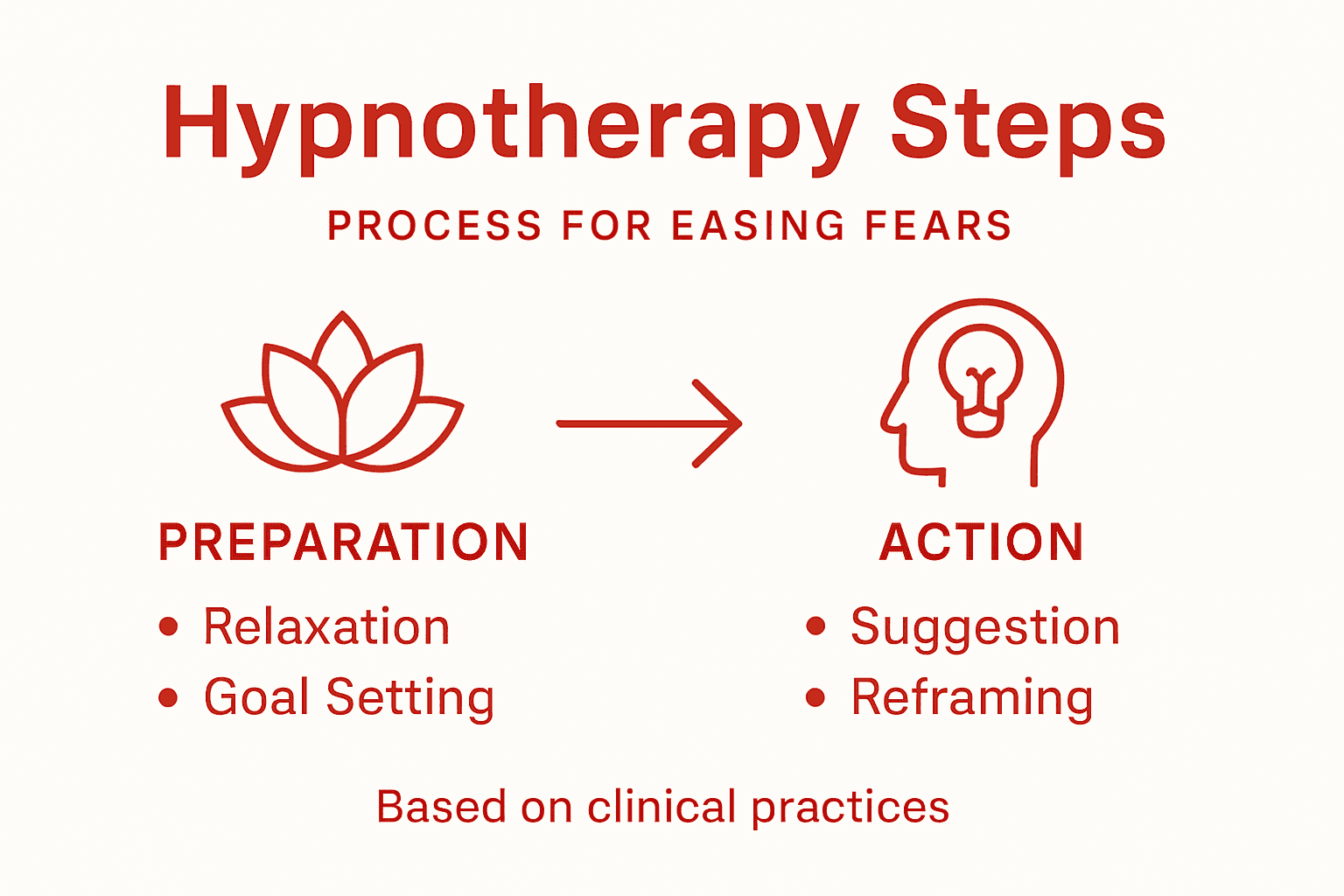
A comprehensive hypnotherapy session typically follows a systematic process that allows practitioners to guide clients through carefully orchestrated psychological interventions. The sequence involves initial consultation, establishing therapeutic rapport, inducing a relaxed state of consciousness, introducing therapeutic suggestions, and implementing post-hypnotic reinforcement strategies.
Pro tip: Maintain a consistent and compassionate demeanor during hypnotherapy sessions, as the client’s sense of safety and trust directly influences therapeutic outcomes.
Advanced Methods Beyond Traditional Hypnosis
Modern hypnotherapy is rapidly evolving beyond conventional techniques, incorporating cutting-edge technological and interdisciplinary approaches that expand its therapeutic potential. Newer hypnotherapy modalities transcend classic interventions by integrating advanced methodologies that enhance client engagement and treatment effectiveness.
The emerging advanced methods in hypnotherapy include:
-
Technological Integration
- Virtual reality exposure therapy
- Interactive digital hypnosis platforms
- Biofeedback-enhanced hypnotic techniques
- Mobile application support systems
-
Multi-Modal Intervention Strategies
- Cognitive-behavioral hypnotherapy hybrid models
- Mindfulness and hypnosis combined approaches
- Neurolinguistic programming integration
- Trauma-informed hypnotic interventions
-
Personalized Treatment Frameworks
- Genetic psychological profiling
- Individualized suggestion protocols
- Adaptive therapeutic algorithms
- Continuous outcome measurement techniques
These advanced methods represent a significant departure from traditional hypnosis, emphasizing a more holistic, scientifically grounded approach to psychological transformation. By leveraging technology, interdisciplinary research, and sophisticated psychological frameworks, practitioners can now offer more precise, targeted, and effective interventions for clients struggling with complex fear-based conditions.
Here’s a summary of how advanced hypnotherapy methods enhance traditional practices:
| Modern Method | Key Advantage | Example Application |
|---|---|---|
| Virtual reality integration | Greater immersion and realism | Simulating feared scenarios safely |
| Biofeedback-enhanced hypnosis | Monitors stress in real time | Adjusting sessions based on heart rate |
| Cognitive-behavioral hybrid models | Combines conscious and subconscious work | Treating complex phobias effectively |
| Personalized algorithms | Adapts treatment to individual | Dynamic session adjustments |
Pro tip: Continuously update your therapeutic toolkit by attending advanced training and staying current with emerging hypnotherapy research and technological innovations.
Risks, Limitations, and Ethical Concerns
Hypnotherapy, while a powerful therapeutic approach, requires careful consideration of potential risks and ethical boundaries. Scientific perspectives highlight critical concerns surrounding the responsible application of hypnotic techniques in clinical settings.
The primary risks and limitations encompass several key areas:
-
Psychological Vulnerabilities
- Potential for false memory creation
- Risk of unintended psychological suggestion
- Temporary emotional destabilization
- Potential for re-traumatization
-
Professional Practice Limitations
- Inconsistent practitioner training standards
- Lack of comprehensive regulatory frameworks
- Variability in therapeutic effectiveness
- Limited empirical evidence for some conditions
-
Ethical Considerations
- Informed consent protocols
- Maintaining client autonomy
- Preventing therapeutic boundary violations
- Ensuring transparent treatment expectations
Practitioners must approach hypnotherapy with rigorous scientific methodology and unwavering ethical standards. This requires comprehensive training, continuous professional development, and a commitment to evidence-based practices that prioritize client safety and psychological well-being.
Responsible hypnotherapy demands a delicate balance between therapeutic innovation and stringent ethical guidelines.
Pro tip: Always maintain detailed documentation of client interactions and obtain explicit, informed consent before initiating any hypnotherapeutic interventions.
Comparing Hypnotherapy With Other Treatments
Hypnotherapy presents a unique approach to treating fears and anxiety, offering distinct advantages and nuanced differences when compared to traditional therapeutic interventions. Meta-analytic research reveals complex dynamics in treatment effectiveness across different psychological approaches.
Key comparative dimensions between hypnotherapy and alternative treatments include:
-
Cognitive Behavioral Therapy (CBT)
- Hypnotherapy accesses subconscious processes
- CBT focuses on conscious thought patterns
- Integrated approaches show enhanced outcomes
- Different depth of psychological intervention
-
Pharmaceutical Treatments
- Non-invasive psychological intervention
- No pharmacological side effects
- Addresses root psychological mechanisms
- Promotes long-term behavioral change
-
Traditional Talk Therapy
- More direct subconscious engagement
- Faster potential for emotional transformation
- Less time-intensive intervention
- Targeted suggestion-based techniques
Research indicates that combining hypnotherapy with cognitive approaches can significantly enhance emotional regulation and cognitive restructuring. The integrated method offers a more comprehensive treatment strategy that addresses both conscious and unconscious psychological processes.
Here’s how hypnotherapy compares to other fear treatment options:
| Aspect | Hypnotherapy | Cognitive Behavioral Therapy (CBT) | Medication |
|---|---|---|---|
| Approach | Subconscious suggestion | Restructuring thought patterns | Neurochemical modulation |
| Onset of Relief | Often faster than talk therapy | Moderately paced | Varies, can be rapid |
| Side Effects | Minimal to none | Rare, psychological only | Possible physical side effects |
| Long-Term Change | Promotes lasting behavioral shift | Effective with sustained practice | May require ongoing use |
Effective treatment requires understanding each therapeutic approach’s unique strengths and potential limitations.
Pro tip: Evaluate treatment approaches holistically, considering individual client needs, symptom complexity, and personal psychological dynamics.
Discover Effective Hypnotherapy Training to Transform Fear into Confidence
If you have just explored the science and methods behind hypnotherapy for fears you understand the importance of specialized techniques like subconscious suggestion and cognitive restructuring. Many people struggle with deeply rooted fears such as public speaking anxiety or medical procedure phobias but finding a safe and scientifically grounded path to healing is possible. Our platform offers comprehensive education and training designed to equip you with the skills to not only manage these fears but empower clients or yourself to create lasting change by accessing the subconscious mind.
Take the next step in your hypnotherapy journey today by exploring the wide range of courses and seminars available at https://grilchypnosistraining.com. Learn from proven approaches that go beyond traditional hypnosis methods and benefit from insights developed through advanced and integrative practice. Start reshaping fear responses with confidence by visiting our Uncategorized Archives to find valuable resources and training opportunities tailored to your goals. Join a community committed to ethical and effective hypnotherapy and make an immediate difference in your personal or professional life.
Frequently Asked Questions
What is hypnotherapy for fears?
Hypnotherapy for fears is a therapeutic approach that utilizes the subconscious mind to address and transform deep-rooted fears through focused relaxation and cognitive reframing techniques.
How does hypnotherapy compare to traditional therapies for treating fears?
Hypnotherapy accesses subconscious processes for quicker emotional transformation, while traditional therapies, like Cognitive Behavioral Therapy, focus more on conscious thought patterns. Combining both methods can enhance treatment outcomes.
What types of fears can hypnotherapy effectively treat?
Hypnotherapy can treat various fears, including medical procedure fears, social situation fears, and environmental trigger fears, helping individuals reframe their psychological responses and develop adaptive coping mechanisms.
Are there any risks or limitations associated with hypnotherapy?
Yes, potential risks include psychological vulnerabilities like false memories, emotional destabilization, and inconsistent practitioner training. It’s crucial for practitioners to maintain ethical standards and inform clients about treatment expectations.