
Healthcare practitioners face mounting stress daily, with burnout rates climbing above 50% across medical professions. Hypnotherapy offers a powerful, evidence-based solution through structured workflows that reprogram subconscious stress responses. This comprehensive guide walks you through preparing, executing, and optimizing app-delivered self-hypnosis for stress reduction protocols that deliver measurable results. You’ll discover how to tailor sessions to individual hypnotizability, integrate physiological monitoring, and adapt workflows for both individual and group settings. Whether you’re an established practitioner or aspiring hypnotherapist, these evidence-backed strategies will transform how you help clients manage stress.
Table of Contents
- Preparing Your Stress Management Hypnotherapy Workflow
- Step-by-Step Execution Of Stress Management Hypnotherapy Sessions
- Monitoring, Troubleshooting, And Optimizing Client Outcomes
- Case Study: Applying A Stress Management Hypnotherapy Workflow With Medical Students
- Enhance Your Hypnotherapy Skills With Expert Training
- Frequently Asked Questions
Key takeaways
| Point | Details |
|---|---|
| Evidence-based effectiveness | Hypnotherapy reduces stress with effects comparable to cognitive behavioral therapy across diverse populations. |
| Personalization matters | Tailoring sessions to client hypnotizability and stress profiles significantly enhances therapeutic outcomes. |
| Physiological tracking | Heart rate variability and electrodermal activity provide objective measures of stress reduction progress. |
| Digital accessibility | Self-hypnosis apps extend therapeutic benefits between sessions with strong empirical support. |
| Group applications | Modified workflows for group sessions offer efficient stress management with added social support benefits. |
Preparing your stress management hypnotherapy workflow
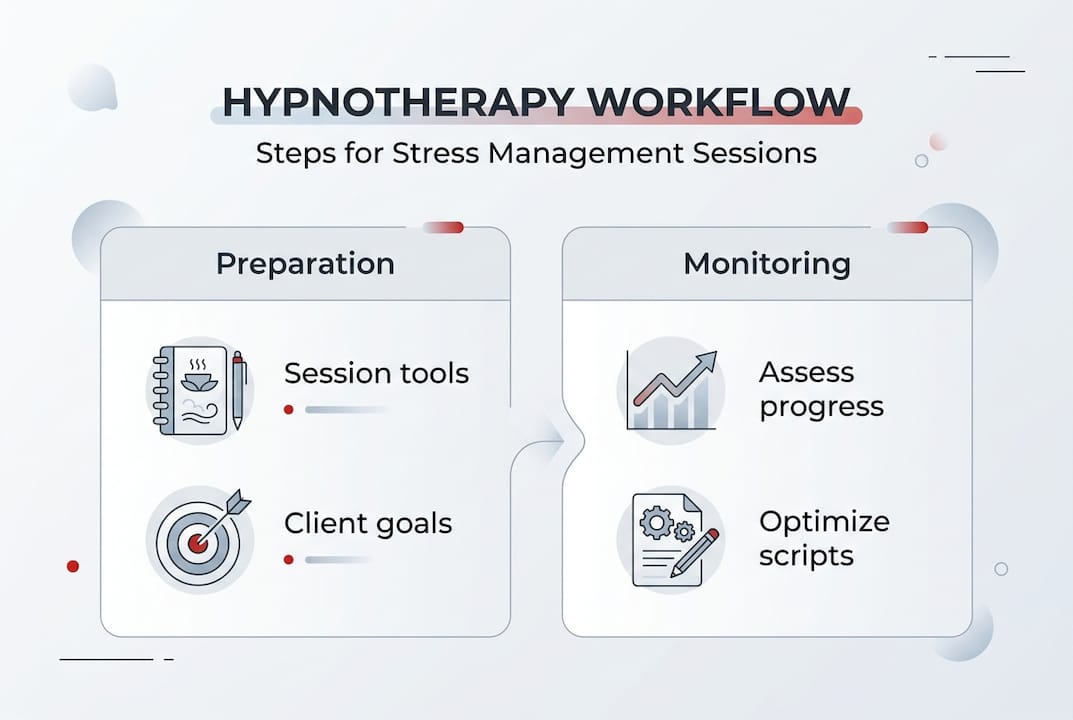
Building an effective hypnotherapy workflow starts with thorough preparation that sets the foundation for client success. Your initial assessment should identify baseline stress levels using validated instruments like the Perceived Stress Scale alongside hypnotizability screening. These metrics guide how you structure sessions and personalize suggestions.
Gather essential tools before your first session. You’ll need quality recording equipment for creating personalized audio tracks clients can use at home. Stock a library of proven scripts addressing common stress triggers: work pressure, relationship conflicts, health anxiety, and performance demands. Research shows app-delivered self-hypnosis for stress reduction extends therapeutic benefits, so familiarize yourself with reputable digital platforms you can recommend.
Physiological monitoring elevates your workflow from subjective to objective measurement. Heart rate variability biofeedback devices cost under $200 and provide real-time data on parasympathetic nervous system activation during sessions. Electrodermal activity sensors reveal stress arousal patterns that verbal reports might miss. These tools validate your interventions and motivate clients who see concrete progress.
Essential preparation checklist:
- Complete intake forms covering stress history, triggers, coping mechanisms, and previous therapy experience
- Administer hypnotizability assessment using Stanford or Harvard scales
- Establish baseline measurements: stress questionnaires, HRV readings, and client-reported severity ratings
- Review client background to identify personalized suggestion themes and imagery preferences
- Prepare recording setup for session documentation and take-home reinforcement tracks
Understanding your client’s stress profile shapes every aspect of your workflow. A medical resident facing exam anxiety requires different suggestions than a nurse managing compassion fatigue. Dig into their specific stressors, failed coping attempts, and moments when stress peaks. This intelligence transforms generic relaxation scripts into targeted interventions addressing root causes.
| Assessment Area | Tools | Purpose |
|---|---|---|
| Stress severity | PSS-10, DASS-21 | Baseline and progress tracking |
| Hypnotizability | Stanford Scale, HGSHS:A | Session structure guidance |
| Physiological | HRV monitor, EDA sensor | Objective stress markers |
| Cognitive | Executive function tests | Broader impact assessment |
Set realistic session goals collaborating with your client. Research demonstrates single sessions produce measurable benefits, but lasting transformation typically requires four to eight sessions. Frame expectations around progressive improvement rather than instant cure. Clients who understand the cumulative nature of hypnotherapy show better engagement and compliance with self-hypnosis for stress relief practice between appointments.
Pro Tip: Create a pre-session ritual clients perform before each appointment. This might include five minutes of deep breathing, reviewing their stress journal, or listening to a brief relaxation track. Rituals prime the subconscious for hypnotic work and improve induction speed.
Step-by-step execution of stress management hypnotherapy sessions
Your session execution determines whether clients experience superficial relaxation or deep subconscious reprogramming. Start with a calibrated induction matching your client’s hypnotizability profile. Highly hypnotizable clients respond to rapid, authoritative inductions, while those with moderate suggestibility benefit from permissive, gradual approaches. Spend five to ten minutes guiding them into trance using progressive relaxation, eye fixation, or imagery-based methods.

Once you establish trance depth, deliver positive suggestions targeting stress reduction mechanisms. Your language should bypass critical thinking and speak directly to the subconscious. Instead of saying “you will feel less stressed,” use present tense declarations: “you feel calm confidence flowing through your body.” Layer suggestions addressing physiological responses, emotional regulation, and cognitive reframing of stressors.
Core session structure:
- Pre-induction discussion reviewing current stress levels and session intentions
- Induction phase using client-appropriate technique over five to ten minutes
- Deepening through countdown, imagery, or physical relaxation cues
- Suggestion delivery targeting specific stress responses and coping enhancement
- Mental rehearsal visualizing successful stress management in real-world scenarios
- Re-orientation bringing client back to alert state with positive anchors
- Post-session debrief and self-hypnosis instruction for home practice
Incorporate mental imagery that resonates with your client’s experiences and preferences. A nature-loving client might visualize stress dissolving like morning mist over a mountain lake. Someone drawn to technology could imagine a mental control panel where they adjust stress dials downward. Personalized imagery increases absorption and strengthens subconscious acceptance of suggestions.
Physiological feedback during sessions provides valuable adjustment signals. Monitor HRV readings to confirm deepening parasympathetic activation as trance progresses. If readings plateau or decline, modify your approach by slowing pace, adjusting voice tone, or introducing different imagery. Studies show hypnosis improves executive function in stressed medical students with measurable physiological changes validating the therapeutic process.
Reinforce session work with self-hypnosis training before clients leave. Teach a simplified version of your induction they can practice daily. Record a personalized track incorporating their specific stress triggers and coping suggestions. Clients who engage in regular self-hypnosis between sessions maintain progress and develop lasting stress management skills independent of practitioner support.
Pro Tip: Build in a “stress inoculation” component where clients mentally rehearse encountering their triggers while maintaining the calm state achieved in trance. This bridges the gap between session relaxation and real-world application, making stress management automatic rather than effortful.
Your re-orientation process matters as much as induction. Bring clients back gradually using counting or imagery of ascending stairs. Anchor their calm state to a physical gesture like touching thumb to forefinger they can use as a quick stress reset throughout their day. This creates a portable tool extending therapeutic benefits beyond your office. For practitioners seeking to deepen their session skills, exploring hypnosis performance improvement techniques provides advanced frameworks applicable to stress management contexts.
Monitoring, troubleshooting, and optimizing client outcomes
Ongoing assessment separates effective practitioners from those flying blind. Administer stress scales at every third session to track quantitative progress. Combine questionnaire data with physiological markers like resting HRV measured at consistent times. This dual approach captures both subjective experience and objective nervous system changes, giving you comprehensive outcome data.
Client resistance appears in various forms requiring different interventions. Some clients intellectualize during trance, analyzing rather than experiencing suggestions. Others fear losing control or harbor skepticism about hypnosis efficacy. Address resistance directly in pre-session discussion, normalizing concerns and reframing hypnosis as a collaborative process. For persistent resistance, switch to more permissive Ericksonian approaches emphasizing client autonomy.
Common challenges and solutions:
- Low hypnotizability: Extend induction time, use confusion techniques, focus on waking suggestion methods
- Session fatigue: Shorten sessions to 30 minutes, increase frequency, incorporate movement-based inductions
- Plateau in progress: Reassess stress sources, modify suggestion content, add complementary techniques like EFT
- Between-session compliance issues: Simplify self-hypnosis protocols, use app reminders, address motivation barriers
Comparing hypnotherapy approaches helps you select optimal methods for different client profiles. Traditional authoritative hypnosis works well with highly suggestible clients preferring clear direction. Ericksonian techniques excel with analytical clients and those with trauma histories requiring gentler approaches. Research indicates Ericksonian hypnotherapy meta-analysis demonstrates large effects on stress and anxiety comparable to cognitive behavioral therapy outcomes.
| Approach | Best For | Key Features |
|---|---|---|
| Traditional authoritative | High hypnotizability, preference for structure | Direct suggestions, rapid inductions, clear commands |
| Ericksonian permissive | Analytical clients, trauma survivors | Indirect suggestions, metaphor, client autonomy emphasis |
| Cognitive-behavioral hypnosis | Clients familiar with CBT | Integration of cognitive restructuring with trance work |
| Mindfulness-based | Meditation practitioners | Present-moment awareness, acceptance themes |
Adjust your scripts based on client feedback and emerging patterns. If a client reports certain imagery triggers anxiety rather than relaxation, immediately modify your approach. Stay flexible rather than rigidly following prepared scripts. The most effective practitioners maintain a library of modular suggestion components they mix and match based on real-time client responses.
Group sessions offer an efficient delivery model for stress management hypnotherapy. Modified workflows accommodate multiple participants through shared induction and generalized suggestions applicable across stress profiles. Group formats provide social support and normalize stress experiences, reducing isolation many clients feel. You’ll need to balance personalization with universal themes, focusing on core stress reduction mechanisms rather than individual trigger details.
Self-hypnosis apps extend your therapeutic reach between sessions and after formal treatment concludes. Recommend evidence-based platforms rather than generic relaxation apps. Quality apps include progressive programs, personalization options, and usage tracking you can review with clients. Digital tools democratize access for clients unable to afford ongoing sessions while maintaining therapeutic momentum. For practitioners building comprehensive client support systems, building hypnotherapy workflow sessions provides frameworks integrating multiple delivery modalities.
Case study: Applying a stress management hypnotherapy workflow with medical students
A university health center implemented a hypnotherapy workflow for 30 medical students reporting high stress during exam preparation. Students received baseline assessments including the Perceived Stress Scale, executive function testing, and HRV measurements. Initial hypnotizability screening revealed a normal distribution, with most students falling in the moderate range.
The intervention consisted of three personalized hypnotherapy sessions over six weeks. Sessions followed the workflow outlined earlier: calibrated induction, stress-specific suggestions, mental rehearsal of exam success, and self-hypnosis training. Practitioners tailored suggestions to medical education stressors: information overload, performance pressure, sleep disruption, and imposter syndrome. Each student received a personalized audio track for daily practice.
Measurable outcomes exceeded expectations. Students showed significant reductions in perceived stress scores, with average decreases of 28% from baseline. Executive function tests revealed improvements in working memory and cognitive flexibility. HRV measurements indicated enhanced parasympathetic recovery, suggesting improved physiological stress resilience. These findings align with research showing hypnosis effects on stressed medical students’ physiological and cognitive function across hypnotizability levels.
Key success factors identified:
- Brief, focused sessions fitting medical students’ limited schedules
- Integration of physiological monitoring validating subjective improvements
- Peer group optional sessions providing social support and normalized stress experiences
- Emphasis on self-hypnosis skills transferable beyond the intervention period
Student feedback highlighted the practical value of self-hypnosis training. Many reported using techniques during actual exams to manage anxiety and maintain focus. Several students noted improved sleep quality and reduced reactivity to academic setbacks. The intervention’s success led to permanent integration into the university’s student wellness programming.
“Learning self-hypnosis gave me a tool I could use anywhere, anytime. During my biochemistry final, I used the thumb-finger anchor we practiced and felt my anxiety melt away. I actually enjoyed the exam instead of dreading it.” Medical student participant
Practitioners running the program emphasized the importance of engaging young adults through technology integration and autonomy-supportive language. Rather than prescriptive instructions, they framed hypnosis as a skill students were learning and refining. This approach increased buy-in and self-practice compliance. The case demonstrates how structured workflows adapt to specific populations while maintaining core therapeutic principles. Practitioners interested in expanding their stress management capabilities can explore advanced hypnotherapy stress benefits for deeper theoretical foundations.
Enhance your hypnotherapy skills with expert training
Mastering stress management hypnotherapy requires more than reading articles. You need hands-on training, supervised practice, and ongoing skill refinement to deliver the outcomes your clients deserve. Structured professional development transforms theoretical knowledge into practical expertise that builds your confidence and client results.
Our advanced training programs equip you with evidence-based workflows, personalized supervision, and a community of practitioners committed to excellence. You’ll learn to adapt techniques across client populations, integrate physiological monitoring, and troubleshoot challenging cases with expert guidance. Whether you’re establishing your practice or expanding your therapeutic toolkit, our advanced hypnotherapy methods guide provides frameworks that elevate your clinical impact. Explore our comprehensive approach to building hypnotherapy workflow sessions that consistently produce measurable stress reduction. Invest in your professional growth and discover how to build hypnotherapy confidence that translates directly into client transformation.
Frequently asked questions
What is the typical length of a stress management hypnotherapy session?
Most sessions last 45 to 60 minutes, including pre-session discussion, hypnotic work, and post-session integration. Shorter 30-minute focused sessions work well for clients with scheduling constraints or those new to hypnosis. Session length should match client needs, attention capacity, and the complexity of stress issues being addressed.
How do you measure client progress during hypnotherapy-based stress management?
Combine validated stress questionnaires like the Perceived Stress Scale with physiological markers including heart rate variability and electrodermal activity readings. Client self-reports of stress frequency, intensity, and coping effectiveness provide qualitative data complementing objective measures. Review progress every three to four sessions and adjust techniques based on trends and feedback. For comprehensive tracking systems, explore managing hypnotherapy client progress frameworks.
Can hypnotherapy workflows be adapted for group stress management sessions?
Yes, workflows modify effectively for group settings using shared inductions and generalized suggestions applicable across participants. Group hypnosis reduces perceived stress and improves coping with additional benefits of social support and normalized experiences. Groups work best with six to twelve participants sharing similar stress profiles, such as healthcare workers or students.
What role does client hypnotizability play in hypnotherapy success for stress reduction?
Hypnotizability influences initial responsiveness, but quality session tailoring mitigates differences across the suggestibility spectrum. Research shows session benefits observed regardless of hypnotizability when practitioners adapt induction methods and suggestion styles. Including self-hypnosis training benefits all clients by building skills that deepen over time with practice, effectively increasing functional hypnotizability.
How many sessions does effective stress management through hypnotherapy typically require?
Most clients experience measurable benefits within three to four sessions, with optimal outcomes emerging over six to eight sessions. Single sessions produce immediate relaxation and introduce self-hypnosis skills, while multiple sessions allow for progressive deepening and habit formation. Maintenance sessions every four to six weeks help clients sustain gains and address emerging stressors.